
Library
Essential Texts on Psychedelics
A curated reading list drawn from the foundational scientific, historical, and philosophical literature on psychedelic substances. These are the works that shaped what is known — and debated — about this field.
Where a free copy exists, a Read free → link points to it on the Internet Archive — a nonprofit digital library. Public-domain titles open to read instantly; others can be borrowed free with a free Archive account.
Psilocybin

Psilocybe cubensis · Alan Rockefeller · CC BY-SA 4.0 · Wikimedia Commons
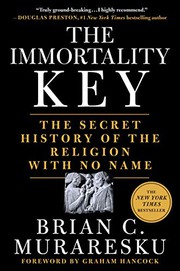
The Immortality Key: The Secret History of the Religion with No Name
Investigates the hypothesis that the kykeon potion at the center of the Eleusinian Mysteries — the ancient Greek rites that shaped Western civilization — contained psychedelic ergot compounds. Controversial and extensively documented. A serious scholarly argument for psychedelics as a foundation of Western religious experience.
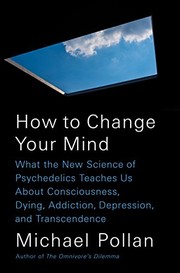
How to Change Your Mind
Pollan's account of the modern psychedelic renaissance — covering the science of the Default Mode Network, the Johns Hopkins and NYU trials, the history of psychedelic research, and his own experiences with psilocybin, LSD, and 5-MeO-DMT. The book most responsible for introducing psychedelics to a mainstream audience.
Read free →
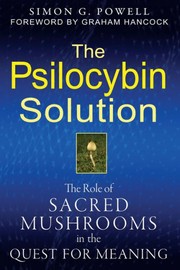
The Psilocybin Solution: The Role of Sacred Mushrooms in the Quest for Meaning
Powell presents an information-theoretic account of psilocybin consciousness — arguing that the mushroom acts as a conduit to something Powell calls "the Other": a source of biologically and spiritually meaningful information accessible through psychedelic states. Dense, original, and philosophically rigorous.
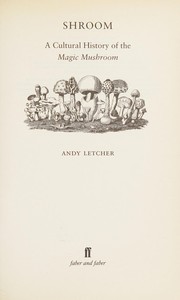
Shroom: A Cultural History of the Magic Mushroom
A scholarly corrective to mushroom mythology. Letcher challenges the "ancient use" narrative and argues that psilocybin mushrooms were essentially unknown as psychedelics until the 1950s. Essential reading for anyone who wants to separate fact from folklore in mushroom history.
Read free →
DMT & Ayahuasca

Ayahuasca brewing · Apollo · CC BY 2.0 · Wikimedia Commons
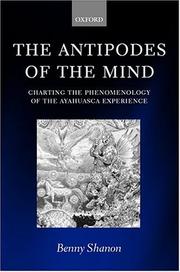
The Antipodes of the Mind: Charting the Phenomenology of the Ayahuasca Experience
The most rigorous phenomenological study of the ayahuasca experience ever published. Shanon, a cognitive scientist, catalogued and analyzed thousands of ayahuasca visions across hundreds of sessions, identifying recurring themes, figures, and structures that suggest the experience accesses a shared substrate of mind.
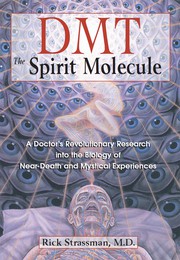
DMT: The Spirit Molecule
The definitive account of Strassman's landmark 1990–1995 UNM research — the first federally approved psychedelic study in decades. 400 doses to 60 volunteers, documented entity contact, and a bold hypothesis linking the pineal gland to endogenous DMT production. Required reading for anyone interested in DMT research.
Read free →
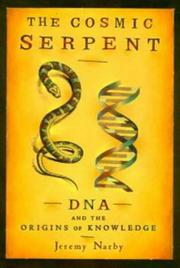
The Cosmic Serpent: DNA and the Origins of Knowledge
Anthropologist Narby's account of living with the Ashaninca people of the Amazon, and his hypothesis — born from his own ayahuasca experiences — that shamanic visions access information encoded in DNA. Speculative but thought-provoking; one of the most widely discussed books in ayahuasca literature.
Read free →
The Road to Eleusis: Unveiling the Secret of the Mysteries
The foundational text proposing that the kykeon of the Eleusinian Mysteries contained an ergot-derived psychedelic. Co-authored by the mycologist who introduced psilocybin mushrooms to the West, the chemist who discovered LSD, and a classical scholar. Controversial but impossible to dismiss.
Read free →
5-MeO-DMT

Incilius alvarius (Sonoran Desert toad) · Wikimedia Commons
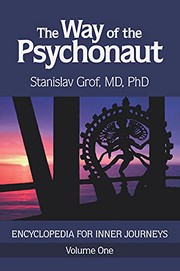
The Way of the Psychonaut: Encyclopedia for Inner Journeys
The magnum opus of the psychiatrist who pioneered LSD-assisted psychotherapy and founded transpersonal psychology. Grof's encyclopedic two-volume work provides the most comprehensive theoretical framework available for understanding non-ordinary states of consciousness — including the complete ego dissolution and nondual awareness characteristic of 5-MeO-DMT. Essential foundational reading for anyone working seriously in this space.
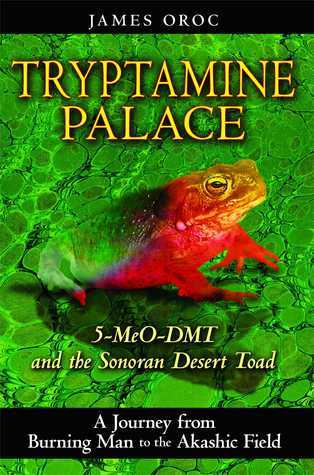
Tryptamine Palace: 5-MeO-DMT and the Sonoran Desert Toad
The most thorough and personal book written about 5-MeO-DMT. Oroc chronicles his own transformative encounters with the substance, develops a quantum-physics-informed model of consciousness to explain the "white light" experience, and surveys the global use of 5-MeO-DMT-containing plant preparations in indigenous traditions. Essential.
Mescaline & Peyote

Lophophora williamsii (peyote) · Public domain · Wikimedia Commons
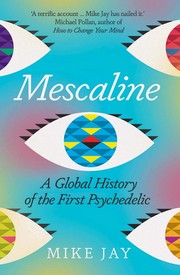
Mescaline: A Global History of the First Psychedelic
The definitive history of mescaline — from Chavin culture's San Pedro use in 1200 BCE, through German psychiatry's early studies, to Huxley's Hollywood Hills experiment in 1953 and the coining of the word "psychedelic." Jay is meticulous, readable, and fair-minded. This is the book on mescaline.
Read free →
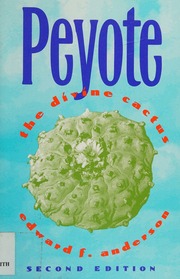
Peyote: The Divine Cactus
The comprehensive botanical, ethnobotanical, and anthropological reference on peyote. Covers the plant's biology, its chemistry, its legal history, and its role in the Native American Church and indigenous Mexican traditions in exhaustive detail.
Read free →
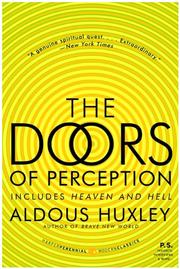
The Doors of Perception / Heaven and Hell
The book that introduced mescaline to the Western literary imagination. Huxley's account of his 1953 experience — vases of flowers transfigured with numinous significance, the "reducing valve" theory of the brain — remains one of the most eloquent and influential descriptions of a psychedelic experience ever written.
Read free →
Key Figures
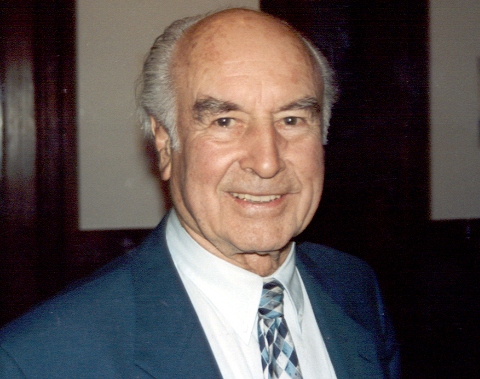
Albert Hofmann, October 1993 · Philip H. Bailey · CC BY-SA 2.5 · Wikimedia Commons
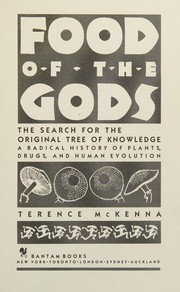
Food of the Gods: The Search for the Original Tree of Knowledge
McKenna's sweeping theory of human evolution and psychedelic plants — including the "stoned ape" hypothesis and a history of humanity's relationship with psychoactive substances. Provocative, erudite, and unverifiable — but no list of essential psychedelic texts is complete without it.
Read free →
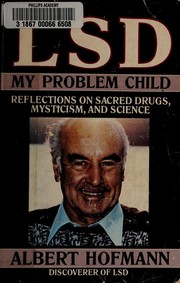
LSD: My Problem Child
The autobiography of the chemist who synthesized LSD and first isolated psilocybin. Hofmann recounts his accidental discovery of LSD's properties in 1943, his participation in Wasson's mushroom ceremony in Mexico, and his lifelong belief that psychedelics, approached with respect, hold profound potential for human beings.
Read free →
The Joyous Cosmology
Watts's exploration of psychedelic experience through the lens of Eastern philosophy. Brief, dense, and lyrical — one of the first attempts to articulate the philosophical implications of ego dissolution in language accessible to a Western audience. Preface by Timothy Leary and Richard Alpert.
Read free →
Microdosing & Clinical Science

A Really Good Day: How Microdosing Made a Mega Difference in My Mood, My Marriage, and My Life
A writer and attorney documents a month of microdosing LSD to address severe mood dysregulation, drawing on James Fadiman's research protocol. Honest, accessible, and one of the books most responsible for bringing microdosing into mainstream conversation.
Read free →
Stealing Fire: How Silicon Valley, the Navy SEALs, and Maverick Scientists Are Revolutionizing the Way We Live and Work
Examines the pursuit of altered states — including psychedelics — across performance culture, military training, and technology. Places psychedelic experience within the broader science of flow states and ecstatic experience.
Read free →
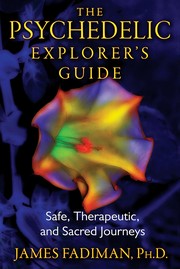
The Psychedelic Explorer's Guide: Safe, Therapeutic, and Sacred Journeys
Fadiman's practical guide to psychedelic use — from session preparation and set and setting, to the microdosing protocol he developed and popularized. The closest thing to a clinical manual for non-clinical psychedelic use. Grounded in decades of research and practice.
Literature
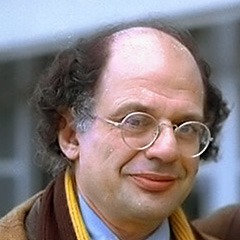
Allen Ginsberg, 1978 · Ludwig Urning · CC BY-SA 3.0 · Wikimedia Commons
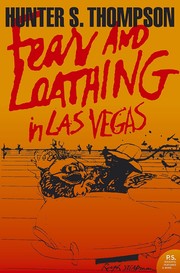
Fear and Loathing in Las Vegas: A Savage Journey to the Heart of the American Dream
The definitive work of gonzo psychedelic literature. Thompson's account of two men, a red convertible, and a trunk full of mescaline, LSD, ether, and amyls en route to Las Vegas is at once a demolition of the American Dream and one of the funniest books in the English language. The psychedelic content is documentary; the prose is its own altered state.
Read free →
The Yage Letters
Epistolary account of two Beat Generation writers separately searching for yagé — ayahuasca — in South America. Burroughs's letters from Peru, Ecuador, and Colombia in 1953 describe his pursuit of the "ultimate fix" with cold, clinical curiosity; Ginsberg's 1960 reply records terror and dissolution. Together they form one of the earliest literary documents of the Western encounter with plant medicine.
Read free →
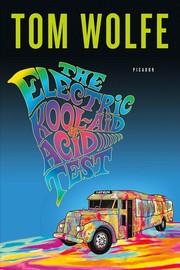
The Electric Kool-Aid Acid Test
Wolfe's New Journalism account of Ken Kesey and the Merry Pranksters — their cross-country bus trip, their Acid Tests, and their role in transmitting LSD from the laboratory to the counterculture. Wolfe never took acid himself; his prose nonetheless reads like a controlled substance. The most vivid document of the moment when psychedelics escaped containment.
Read free →
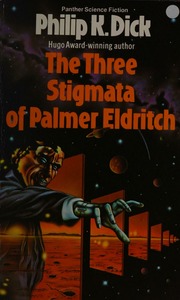
The Three Stigmata of Palmer Eldritch
Dick's darkest and most hallucinatory novel. A mysterious alien drug called Chew-Z offers "translation" into a reality indistinguishable from God — or something far worse. Written as Dick was himself experimenting with psychedelics, the novel dissolves the line between drug experience, religious revelation, and ontological collapse. No other work of science fiction goes as far into what a psychedelic encounter with the Other might actually mean.
Read free →
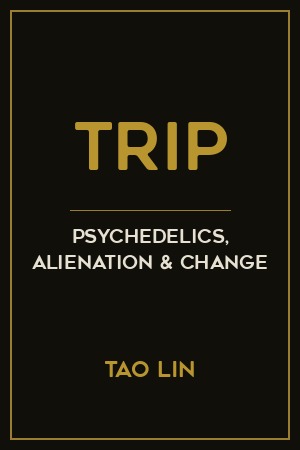
Trip: Psychedelics, Alienation, and Change
A lyrical, essayistic memoir tracing Lin's use of cannabis, salvia, psilocybin, and DMT alongside sustained engagement with Terence McKenna, Timothy Leary, and Aldous Huxley. Part literary autobiography, part intellectual history of the psychedelic counterculture — written with the flat affect and recursive self-examination that defines Lin's prose. One of the few contemporary literary works to treat psychedelics as a serious subject rather than a backdrop.
This library is for educational purposes only. Nothing here constitutes legal, medical, or therapeutic advice. Know your local laws.